
Vacuum thermal evaporation · PVD
Vacuum‑deposited
metal anodes
We deposit metal onto copper foil at the nanometre scale to make thinner, more even battery anodes.

- Li anode thickness
- ≤ 20µm
- Thickness uniformity
- ±5%
- Deposition width
- > 250mm
- Target energy density
- 500Wh/kg
Ultra-thin metal anodes by PVD
- Humanoid robots
- Delivery robots
- Fixed-wing drones
Materials
Multi-material PVD
One vacuum deposition process, a separate ultra-thin film for each material.
Products- 01Evaporated in vacuum
- 02Deposited on copper foil
- 03Into the battery anode
- Li
- Zn
- Ag
- LiF
Applications
Drones and robotics
More energy for the same weight extends flight time, payload capacity and operating hours.
Drones Multirotor · fixed-wing
- Longer flight timeMore energy without adding battery weight.
- Greater payload capacityLess battery mass, more available payload.
- Extended rangeLonger missions between charging stops.
Robotics Humanoid · mobile
- Longer operating timeMore working hours between charges.
- Improved mobilityLower battery weight reduces load on joints and actuators.
- More compact pack designHigher energy density in limited internal space.
From FLUX
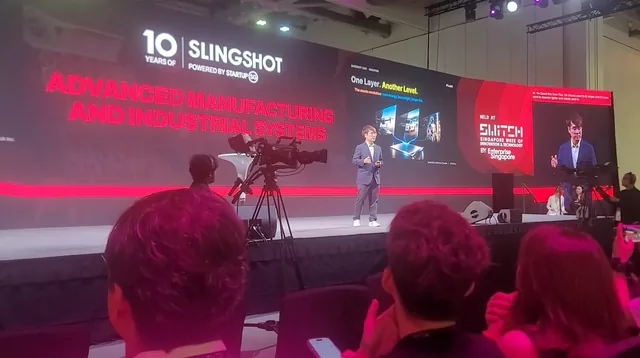
SLINGSHOT 2026 Global Top 50, on stage and on the floor at SWITCH 2026
FLUX was named to the SLINGSHOT 2026 Global Top 50 and the Top 10 of the Advanced Manufacturing domain, then pitched on stage and ran a booth at SWITCH 2026 in Singapore.

Selected for Asan City's first Future Unicorn Club
FLUX is one of seven companies in the first cohort of the Future Unicorn Club, Asan City's new programme for promising local startups. The certificates were presented at Asan City Hall on 1 October.
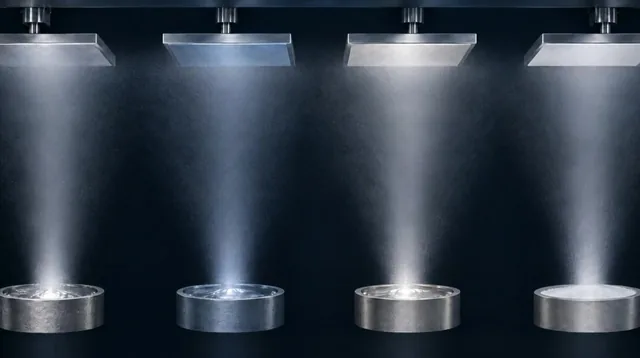
LiF anode material for anode-free batteries enters production
FLUX began producing LiF anode material for anode-free batteries, its third anode material after lithium metal and zinc.
Industry insights
A monthly summary of research, policy and company news in lithium metal and solid-state batteries.
All issues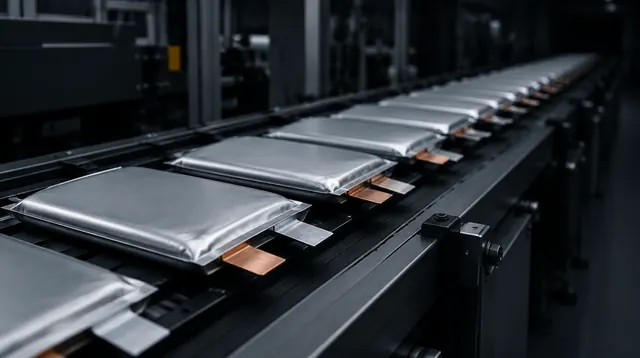
Anode-free cells reach production, and the interface on the current collector
QuantumScape plans a 100 MWh line and launches QS PowerBlock, SES AI scales its Chungju drone-cell plant. Research turns to nanotextured current collectors and dendrite detection.
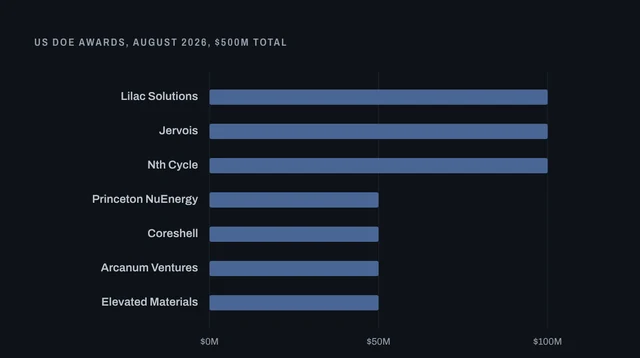
The US puts $500M into seven battery supply-chain projects
A $500M DOE round spans lithium refining, recycling and lithium metal films, and a zeolite separator that improves both the anode and the cathode.
Anode-free research adds a third stage: recovery
An ACS Nano paper targets 100% lithium utilisation by adding recovery to plating and stripping, and Mana Battery and Saft take anode-free design to sodium-ion.
FLUX Corporation
82-17 Namsan 4-gil, Jiksan-eupSeobuk-gu, Cheonan-si
Chungcheongnam-do 31034
Republic of Korea